How Reliable Is a Visual Field Test?

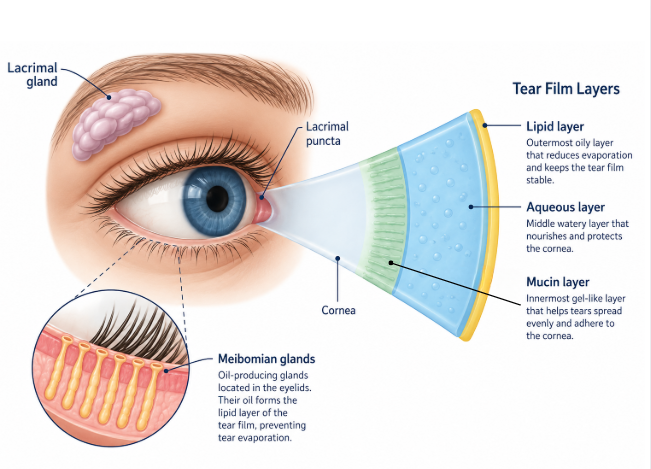
Fuchs Endothelial Dystrophy (FED) is a progressive eye disorder that affects the cornea, the transparent, dome-shaped tissue at the front of the eye. It primarily affects the endothelial cells, a thin layer of cells which maintain corneal clarity and regulate the balance of fluid. We are born with a certain number of endothelial cells and lose them at a slow rate throughout our lives. No new endothelial cells are generated, and when too many of these cells are lost or dysfunctional, the cornea begins to swell and turns cloudy. As a result, light cannot pass through as clearly, leading to blurred or distorted vision. Although the condition is not widely known, its effects on eye health can be significant if not managed appropriately.
The symptoms of FED can vary from person to person and often develop gradually. The condition usually affects both eyes and manifests later in life, often over the age of 50. Common signs and symptoms include:
While FED has a hereditary component, it often occurs sporadically without any family history. The severity and onset of symptoms can vary greatly between individuals.
Some common risk factors associated with FED include:
Diagnosing FED requires a comprehensive eye exam by an ophthalmologist. A few key tests and evaluations include:
While there is no cure for FED, several treatment options can help manage the symptoms and slow the progression of the disease. The choice of treatment largely depends on the severity of the condition.
Non-surgical treatment options such as hypertonic saline eye drops are used for symptomatic FED to reduce corneal swelling and as a temporising measure ahead of definitive surgical treatment. The drops work by drawing excess fluid out of the cornea, helping to relieve discomfort and blurriness caused by oedema.
Treatment of advanced FED involves surgical intervention to replace the dysfunctional endothelial cell layer with transplanted healthy donor endothelial tissue. Depending on the stage of the FED and the health of the surrounding ocular tissue, your surgeon may recommend the following types of corneal graft surgery:
While FED can be a challenging corneal disease, many individuals can manage it effectively with appropriate treatment. Regular visits to an ophthalmologist are essential for monitoring the progression of the disease and adjusting treatment as necessary.
In cases where more advanced treatments are needed, corneal transplantation has a high success rate, with many patients achieving significant improvement in vision.
Early detection is key to successful management, so regular eye exams are essential for those at risk, particularly individuals with a family history or other risk factors.

Copyright © 2023 Nexus Eye Care | Trans4m Business Consulting – Website Design & SEO | Privacy Policy | ^