What Is Demodex? Understanding Eyelash Mites and Demodex Blepharitis
Demodex are tiny, microscopic mites that naturally live in human hair follicles and oil glands, particularly around the eyelashes and eyelids. They are extremely common, and most people have Demodex without experiencing any problems.
In small numbers, they are considered part of the normal skin environment. However, when their numbers increase, Demodex can contribute to eyelid inflammation and a condition known as Demodex blepharitis.
There are two main species of Demodex that live on humans:
Both species feed on material within the follicles and glands, including sebum (oil) and cellular debris.
Having Demodex is normal. The problem occurs when the population becomes excessive.
Demodex numbers tend to increase with age, and higher numbers have also been associated with conditions affecting the eyelids and skin, including meibomian gland dysfunction, chronic blepharitis and rosacea.
Changes in the eyelid environment may provide conditions that allow the mites to multiply more readily. At the same time, Demodex and their waste products can contribute to inflammation around the follicles and eyelid margins.
This means Demodex and eyelid inflammation can potentially contribute to a cycle: changes in the eyelid environment may allow Demodex numbers to increase, while an increased Demodex population can further irritate and inflame the eyelids.
Blepharitis is inflammation of the eyelid margins. When Demodex are a contributing factor, it is referred to as Demodex blepharitis.
Common signs include:
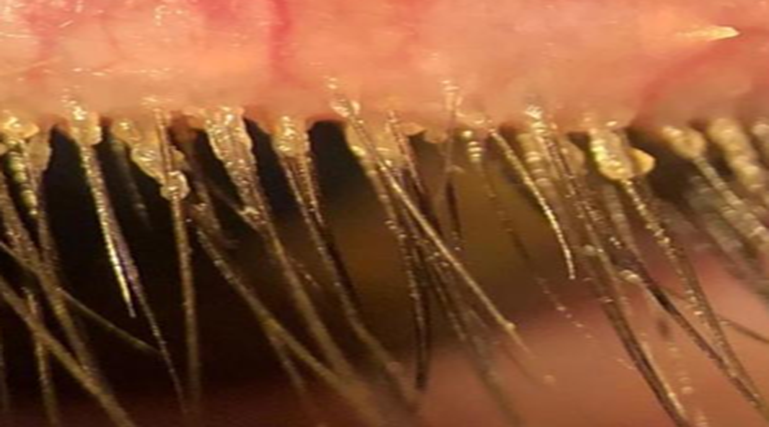
Collarettes are one of the characteristic clinical signs associated with Demodex blepharitis.
Demodex blepharitis is typically diagnosed during a comprehensive eye examination using a slit lamp microscope. The most characteristic finding is the presence of collarettes.
In some cases, a small number of eyelashes may be gently removed and examined under a microscope to directly identify Demodex mites, although this is not routinely required for diagnosis.
Treatment aims to reduce the Demodex population and manage the associated eyelid inflammation.
Depending on the individual case, treatment may include:
Traditional eyelid hygiene can help maintain eyelid health, but Demodex blepharitis may require targeted treatment to address an excessive mite population.
Demodex are a normal and natural part of the eyelid environment, and their presence
alone is not a cause for concern. However, when their numbers become excessive, they can contribute to chronic eyelid inflammation and Demodex blepharitis. With an appropriate diagnosis and targeted treatment, Demodex blepharitis can be effectively managed.
Demodex can contribute to eyelid inflammation, which may affect the health of the eyelid margins and the tear film. In some people, this can contribute to symptoms such as burning, irritation and a gritty sensation. However, dry eye has several possible causes, and not all cases are related to Demodex.
To learn more about the different factors that contribute to dry eye, read our blog, 5 Reasons You Wake Up with Irritated Dry Eyes.
Blepharitis is a general term for inflammation of the eyelid margins. Demodex blepharitis occurs when Demodex mites contribute to this inflammation. Other factors, including bacterial overgrowth and meibomian gland dysfunction, can also play a role in eyelid disease.
Gentle eyelid hygiene can help maintain eyelid health, but it may not be sufficient to manage Demodex blepharitis. When Demodex are contributing to persistent inflammation, targeted treatment may be needed to reduce the mite population. The most appropriate approach depends on the examination findings and the severity of the condition.
Yes, Demodex can contribute to watery eyes in some people. When Demodex mites cause inflammation along the eyelid margins, this can disrupt the normal tear film and irritate the surface of the eye. In response, the eyes may produce excess watery tears. However, watery eyes can have several causes, including dry eye disease, eyelid inflammation and problems with tear drainage. An eye examination can help identify the underlying cause.
Learn more in our blog, How Can Watery Eyes Be Dry?

Copyright © 2023 Nexus Eye Care | Trans4m Business Consulting – Website Design & SEO | Privacy Policy | ^